

THE INTERACTION OF ARTIFICIAL INTELLIGENCE AND HUMAN COGNITION: NEW APPROACHES TO ENHANCING COGNITIVE POTENTIAL
Abstract
This article explores the relationship between artificial intelligence (AI) and human cognition, and the possible outcomes of using this relationship as a method to improve cognition. As AI technology advances and AI is being used alongside human cognitive capability, new opportunities continue to develop in educational, professional, and creative endeavors (Kaplan, 2016). This article will present theoretical scaffolding, newest literature, and applied case studies.
Keyword
References
- Russell, S., & Norvig, P. Artificial Intelligence: A Modern Approach. Pearson, 2021.
- Floridi, L. The Ethics of Artificial Intelligence. Oxford University Press, 2020.
- Ghallab, M., Nau, D., & Traverso, P. Automated Planning: Theory and Practice. Elsevier, 2016.
- Kaplan, J. Artificial Intelligence: What Everyone Needs to Know. Oxford University Press, 2016.
- Luckin, R. Machine Learning and Human Intelligence: The Future of Education for the 21st Century. Routledge, 2018.
- Gerlich, J. (2025). AI as a Cognitive Partner in Education and Research. MDPI Social Sciences.
- Korteling, J. et al. (2021). Human vs. Artificial Intelligence: Collaborative Decision-Making. Frontiers in AI.
- Amiri Golilarz, N. et al. (2025). Neurocognitive-Inspired AI Systems for Human Learning and Creativity. arXiv.
How to Cite
License

This work is licensed under a Creative Commons Attribution 4.0 International License.
This work is licensed under a Creative Commons Attribution 4.0 International License (CC BY 4.0). You are free to share and adapt this work for any purpose, including commercially, provided you give appropriate credit to the original author(s) and source, provide a link to the license, and indicate if changes were made.
License: creativecommons.org
How to Cite
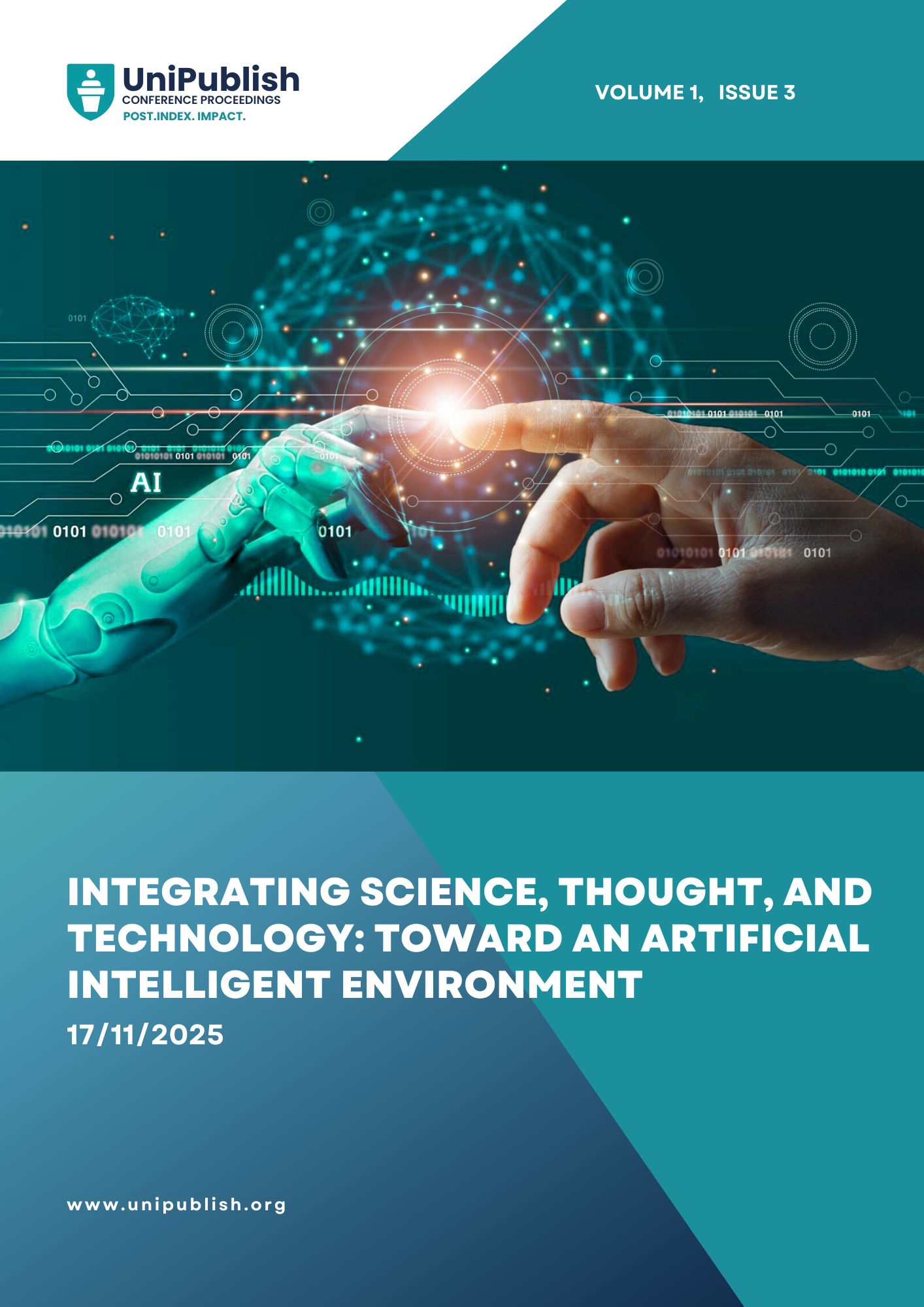
Issue Cover
Downloads
Statistics
- Abstract Views
- : 26 times
- : 40 times