

Human–AI Integration: Transforming Education, Society, and the Future of Work
Abstract
The integration of humanoid and AI is a major change in ways in which humans relate to digital technologies, affecting education, communication, professional contexts, and everyday life. In this article, we discuss the role of artificial intelligence in personalizing education, supporting teachers, and providing accessible learning contexts. We also consider AI's role in modernizing and reshaping the global workplace through automation, data-based and augmented decision making. In addition to practical opportunities, the human-AI partnership raises complex ethical, psychological and social dilemmas including data privacy, creative dependence, and algorithm fairness. This article provides a thorough discussion surrounding the implementation of AI specifically around, challenges and opportunities, in addition to opportunities, and provide recommendations for responsible integration and a sustainable digital transformation
Keyword
References
- McCarthy, J. (2007). What is Artificial Intelligence? Stanford University. https://stanford.edu/~jmc/whatisai.html
- UNESCO. (2023). AI and the future of education: Towards a human-centered approach. https://unesco.org/ai-education
- World Economic Forum. (2024). The future of jobs report. https://weforum.org/reports/the-future-of-jobs-2024
- Khan Academy. (2024). https://www.khanacademy.org/
- Coursera. (2024). https://www.coursera.org
- Duolingo. (2024). https://www.duolingo.com/
How to Cite
License

This work is licensed under a Creative Commons Attribution 4.0 International License.
This work is licensed under a Creative Commons Attribution 4.0 International License (CC BY 4.0). You are free to share and adapt this work for any purpose, including commercially, provided you give appropriate credit to the original author(s) and source, provide a link to the license, and indicate if changes were made.
License: creativecommons.org
How to Cite
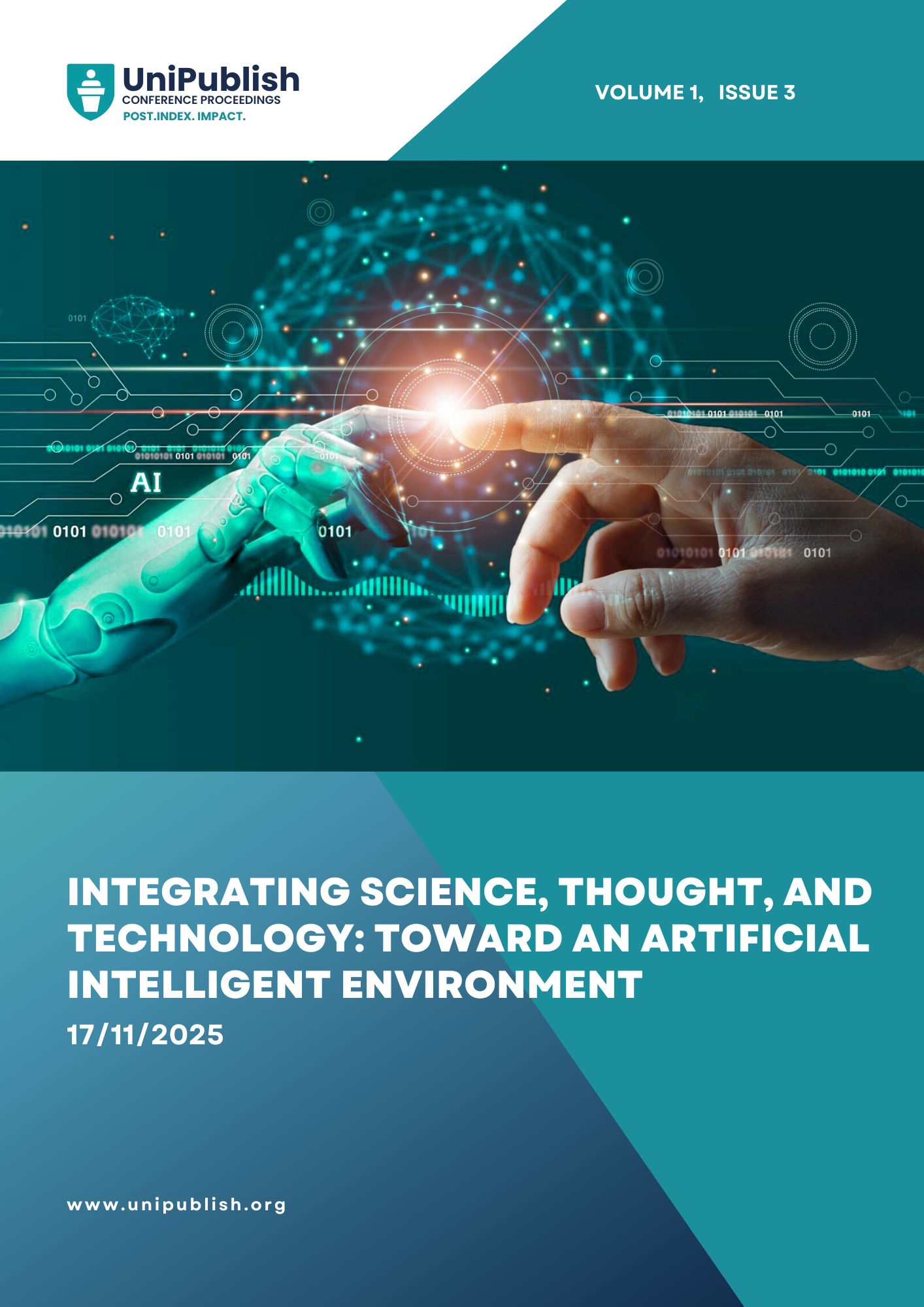
Issue Cover
Downloads
Statistics
- Abstract Views
- : 29 times
- : 39 times