

ARTIFICIAL INTELLIGENCE AS A SUPPORTIVE TOOL FOR INDEPENDENT LEARNING
Abstract
In the contemporary digital era, the utilization of artificial intelligence (AI) has become an integral component of technological advancement and innovation. AI is increasingly being employed across various sectors, including education, healthcare, business, and communication, to enhance efficiency, accuracy, and productivity. The rapid growth of data availability, combined with advancements in machine learning algorithms and computational power, has accelerated the integration of AI systems into everyday activities. Consequently, AI not only assists in automating repetitive tasks but also enables data-driven decision-making and predictive analysis that were previously beyond human capability. Furthermore, the increasing reliance on AI signifies a paradigm shift toward intelligent automation and smart systems, where human expertise and machine intelligence collaborate to achieve optimal outcomes. However, as the adoption of AI continues to expand, concerns regarding ethical implications, data privacy, and algorithmic bias have also emerged, highlighting the need for responsible and transparent implementation of this transformative technology.
Keyword
References
- Baker, T., & Smith, L. (2019). Educ-AI-tion Reimagined: The Future of Learning in the Age of Artificial Intelligence. Nesta.
- Chen, L., & Zhang, Y. (2021). The impact of AI-based tutoring systems on self-regulated learning. Computers & Education, 168(2), 104–178.
- Holmes, W., Bialik, M., & Fadel, C. (2022). Artificial Intelligence in Education. Center for Curriculum Redesign.
- Luckin, R. (2018). Machine Learning and Human Intelligence. UCL Institute of Education Press.
- Luckin, R. (2022). Ethics and responsibility in the use of AI for learning. Educational Technology Review, 34(1), 22–37.
- Selwyn, N. (2020). Should Robots Replace Teachers? Polity Press.
- Song, H., & Kong, S. (2020). Artificial intelligence applications in education. International Journal of Educational Research, 102, 101–120.
How to Cite
License

This work is licensed under a Creative Commons Attribution 4.0 International License.
This work is licensed under a Creative Commons Attribution 4.0 International License (CC BY 4.0). You are free to share and adapt this work for any purpose, including commercially, provided you give appropriate credit to the original author(s) and source, provide a link to the license, and indicate if changes were made.
License: creativecommons.org
How to Cite
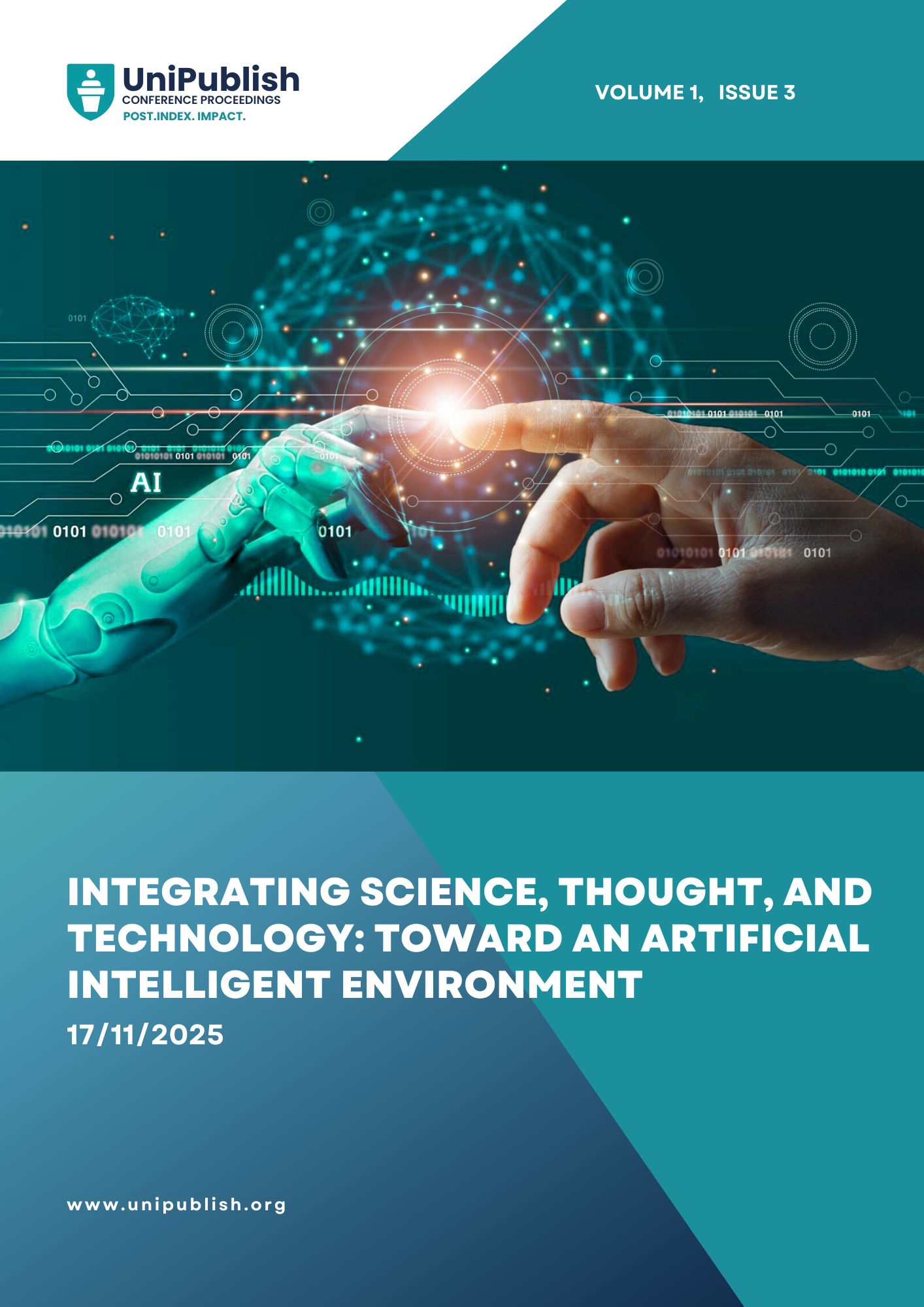
Issue Cover
Downloads
Statistics
- Abstract Views
- : 33 times
- : 16 times