

Human and Artificial Intelligence: Integration of Mind and Emotion–Future Changes
Abstract
The following paper tackles the integration of humans and artificial intelligence. Artificial
intelligence is a very important part of modern life in medicine, education, economics, art, and
other creative activities. This paper seeks to look at what AI is capable of, its impact on human
cognition, how it enhances creativity, and how it is helpful in decision-making in times of
urgency. Possible risks include overdependence, thinking less independently, and effects on
future young minds. The conclusion drawn from the analysis is that AI cannot replace humans
but is a tool and instrument for making them more efficient, knowledgeable, and creative when
used with responsibility
Keyword
References
- Russell, S., & Norvig, P. (2021). Artificial Intelligence: A Modern Approach, 4th ed. Pearson.
- Kaplan, J. 2016. Artificial Intelligence: What Everyone Needs to Know. Oxford University Press.
- Bostrom, N. 2014. Superintelligence: Paths, Dangers, Strategies. Oxford University Press.
- Floridi, L. (2019). The Logic of Information: A Theory of Philosophy as Conceptual Design. Oxford University Press.
- Vinuesa, R., Azizpour, H., Leite, I., et al. (2020). The Role of Artificial Intelligence in Achieving the Sustainable Development Goals. Nature Communications, 11, 233
- Tegmark, M. (2017). Life 3.0: Being Human in the Age of Artificial Intelligence. Alfred A. Knopf.
- OpenAI. 2023. ChatGPT: Optimizing Language Models for Dialogue.
How to Cite
License

This work is licensed under a Creative Commons Attribution 4.0 International License.
This work is licensed under a Creative Commons Attribution 4.0 International License (CC BY 4.0). You are free to share and adapt this work for any purpose, including commercially, provided you give appropriate credit to the original author(s) and source, provide a link to the license, and indicate if changes were made.
License: creativecommons.org
How to Cite
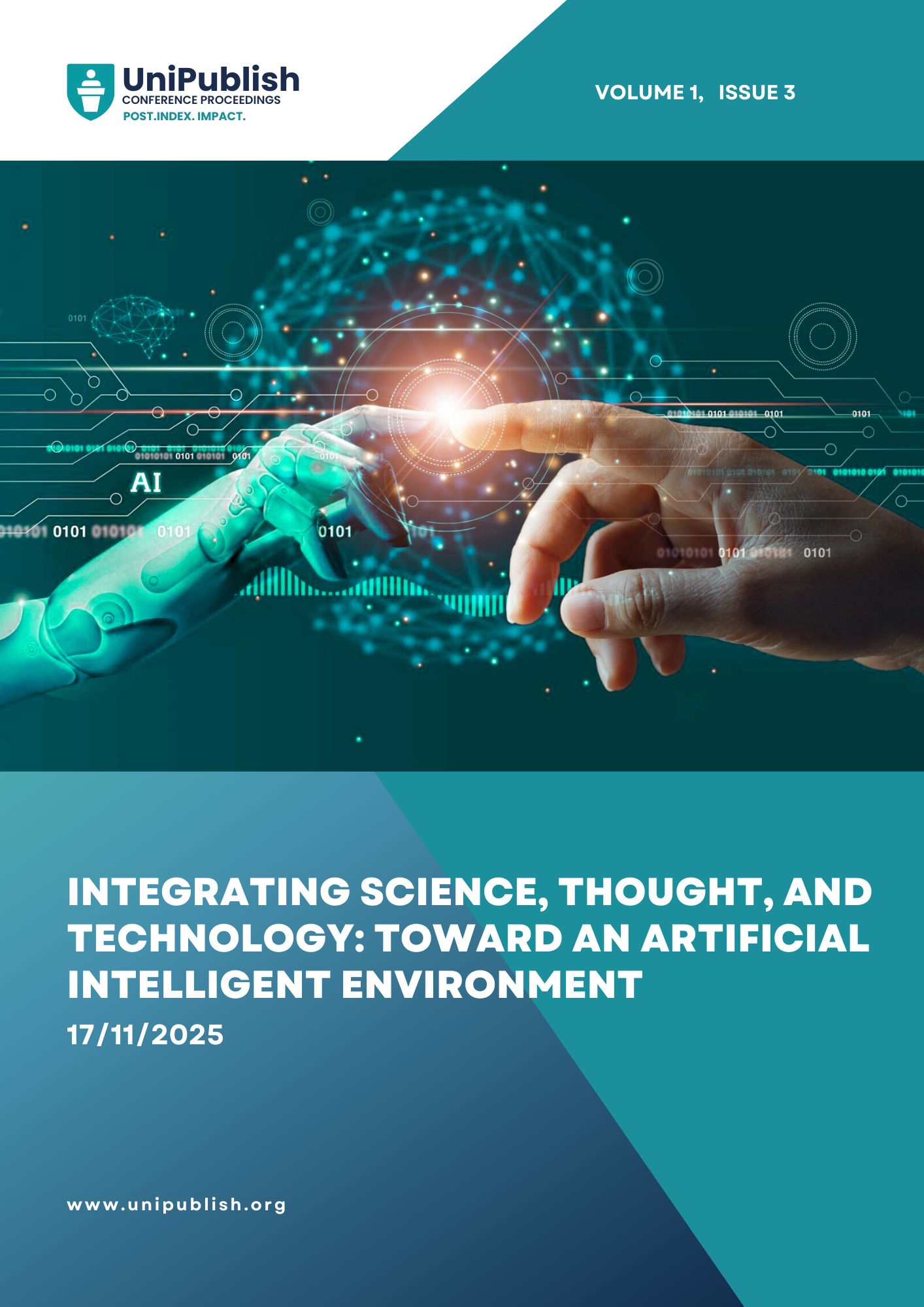
Issue Cover
Downloads
Statistics
- Abstract Views
- : 28 times
- : 47 times